ADCC Charlotte Open
Fight to Win 301
LIJJN Brew Jitsu Winter Open
Fight to Win Fight 302
Fight to Win 303
ADCC San Diego Open
Fight to Win 304
ADCC Curitiba or Parana Open
ADCC European, Middle East & African Tri
ADCC Toronto Open
ADCC Santiago Open
ADCC Portland Open
ADCC Rio de Janeiro Open
ADCC South American Trials #1
ADCC Sao Paulo Kids Trials
2019 Pan Jiu-Jitsu IBJJF Championship Day 1 Mat 8
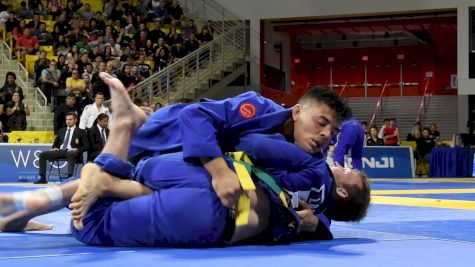
Watch the replay of 2019 Pan Jiu-Jitsu IBJJF Championship - Mat 8 from Mar 21, 2019 on FloGrappling
Mar 22, 2019, Pro
Baleia Breakdown: Renato Canuto's Keys To KASAI Success
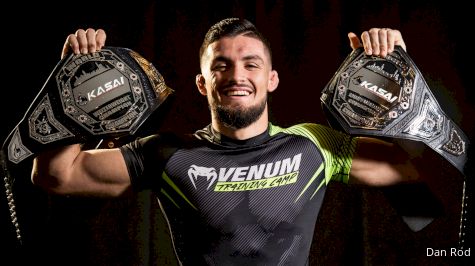
Renato Canuto is a two-time KASAI Pro tournament champion and the most successful competitor to appear on the KASAI stage. The Checkmat black belt has one of the most entertaining styles in our sport today– but don’t let his acrobatics and showmanship fool you. Renato has a very strategic and effective style– there is a method to his madness. Here are my 5 Keys to Renato Canuto’s success at KASAI. Unorthodox Movements (Footwork & Attacks) If you have watched him compete throughout his KASAI career you will recognize Renato’s unique style which, when standing, incorporates a peculiar combination of footwork combined with attacks. Renato constantly moves side to side, in and out, disguising his attacks which vary in the stand-up between takedowns, flying submission attempts or counter attacks. Although he never officially studied the brazilian art of Capoeira, Renato uses his similar footwork based on the same ginga, or creative footwork rhythm, to constantly confuse and hide his attacks. Left, right, back and forth, with level changes in between. You never know what he is going to do next. Wrestling (Defensive & Offensive) From snatch single legs to blast doubles to beautiful hip toss counters, Renato’s aggressive stand-up and takedown game has been a staple part of his success. Not afraid to engage first he– more often than not– attacks first in his matches to get ahead on points in KASAI’s six-minute matches. This sets up the Canuto gameplan, where he follows up with passes, scrambles and sets up submission attacks. If his opponent decides to play on bottom willingly, Renato uses his next most popular tool to score. Acrobatics (Guard Passing cartwheels) If you have seen any of Canuto’s highlight videos you will have seen a number of high-flying cartwheel guard passes and other acrobatic movements. Timed correctly, Renato uses these to eliminate the nuances of the contemporary guard play which could slow him down, and allows him direct access to superior positions to dominate. And more than that… makes his matches some of the most entertaining in KASAI history. Submission Defense With and impressive KASAI Pro record of 8-1-2 Renato not only has an outstanding winning record but has never lost via submission at KASAI. His submission defense is some of the best in the game, where he uses quick and precise counters to defend against some of our sport’s best submission hunters– especially those pesky leg lock guys. Renato seems to stuff, flow and counter out of submissions, appearing to always be three steps ahead AND is even able to use the leg lock counters as openings to take the back of his opponents. Experience Having competed in almost every KASAI event Renato has the most experience under these rules anybody else. KASAI rules are different in that there are no advantages, but submission attacks earn points. This keeps the pace fast and furious, which is where Renato thrives. Some say the best competitors are not only masters of their techniques, but also can manage and understand the points, the clock and what the judges are thinking. IF and when Renato is even close to getting a draw, he knows exactly how to turn up the intensity and take his opponents into deep waters. And THAT is what makes Renato Canuto so successful.
Jul 2, 2019, Pro
Thalison Soares: The Path To Black Belt (Part 2)
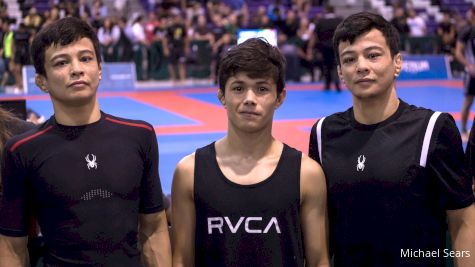
Thalison first caught fans attention after winning the 2016 Worlds as a juvenile blue belt. A roosterweight competitor coming from the same Cicero Costha team as the Miyao brothers, with a back-chasing berimbolo style, it was not long before these similarities led to the nickname of “Little Miyao”. 2016 also saw Thalison win the Flograppling Awards prospect of the year. His performances over the following years always lived up to the hype, winning Worlds in both the gi and no-gi three years in a row. Following the 2016 World title, Thalison kept the ball rolling and dominated the roosterweight division at purple for 2017 and 2018. He never lost in his weight category over the 16 months he spent at purple belt while competing in every major tournament on the globe. Incredibly he won Worlds, Pans, Brasileiros and the European Championship to complete the IBJJF Grand Slam in back-to-back years. During both of these years Thalison also won the Abu Dhabi World Pro. Thalison first caught fans attention after winning the 2016 Worlds as a juvenile blue belt. A roosterweight competitor coming from the same Cicero Costha team as the Miyao brothers, with a back-chasing berimbolo style, it was not long before these similarities led to the nickname of “Little Miyao”. 2016 also saw Thalison win the Flograppling Awards prospect of the year. His performances over the following years always lived up to the hype, winning Worlds in both the gi and no-gi three years in a row. Following the 2016 World title, Thalison kept the ball rolling and dominated the roosterweight division at purple for 2017 and 2018. He never lost in his weight category over the 16 months he spent at purple belt while competing in every major tournament on the globe. Incredibly he won Worlds, Pans, Brasileiros and the European Championship to complete the IBJJF Grand Slam in back-to-back years. During both of these years Thalison also won the Abu Dhabi World Pro. Still representing the Sao Paulo based Cicero Costha team but traveling all over the world to train and compete, Thalison has visited over 20 countries through jiu-jitsu at the young age of 19. Along with many of his Cicero Costha teammates including the Miyao brothers, he now does his camps for major tournaments in New York at Unity Jiu Jitsu under the direction of Murilo Santana.
Jul 1, 2019, Pro
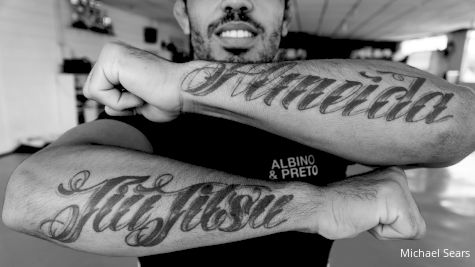
Inside Almeida JJ Part 1: Basilio, Lara & co Training, Drilling, Lifting
Apr 9, 2019, Pro
2019 Pan Jiu-Jitsu IBJJF Championship - Mat 1 - Mar 24, 2019 at 8:50 AM PDT
Watch the replay of 2019 Pan Jiu-Jitsu IBJJF Championship - Mat 1 from Mar 24, 2019 on FloGrappling
Mar 25, 2019, Pro
2019 Pan Jiu-Jitsu IBJJF Championship - Mat 1 Day 3 Full Replay
Watch the replay of 2019 Pan Jiu-Jitsu IBJJF Championship - Mat 1 from Mar 23, 2019 on FloGrappling
Mar 24, 2019, Pro
2019 Pan Jiu-Jitsu IBJJF Championship - Mat 1 - Mar 22, 2019 at 8:47 AM PDT
Watch the replay of 2019 Pan Jiu-Jitsu IBJJF Championship - Mat 1 from Mar 22, 2019 on FloGrappling
Mar 23, 2019, Pro
2019 Worlds: Michael Liera Jr. Talks HUGE Win Over Tommy Langaker
Jun 2, 2019, Pro
No.1 UAEJJF-Ranked Gabriel Sousa Finishes Season Strong With Gold in London
Gabriel Sousa has been grinding the entire season and no stands top of the UAEJJF ranking. With gold in London, he explains how he'll carry this momentum into the Abu Dhabi World Pro in April.
Mar 9, 2019, Pro
2019 Abu Dhabi Grand Slam London - Mat 1 - Mar 10, 2019 at 4:44 AM CDT
Watch the replay of 2019 Abu Dhabi Grand Slam London - Mat 1 from Mar 10, 2019 on FloGrappling
Mar 10, 2019, Pro
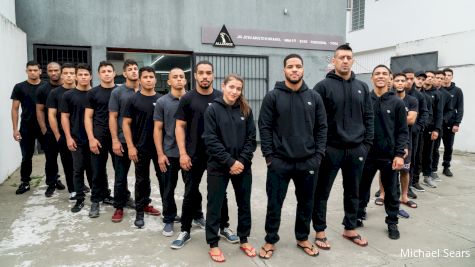
Dream Art: The Alliance Project Turning Colored Belts Into Champions Part 1
Feb 26, 2019, Pro
Gabriel Sousa On His Impressive First Year At Black Belt
After securing the #1 ranking on the Abu Dhabi circuit Gabriel Sousa sets his sights on a World Championship gold medal.
May 15, 2019, Pro
1 vs 2 2019 ADCC West Coast Trials
Feb 9, 2019, Pro
Andressa Cintra vs Jessica Swanson Kasai Super Series 1
Feb 3, 2019, Pro
Ricardo Abreu vs Tex Johnson Kasai Super Series 1
Matheus Lutes vs Dante Leon Kasai Super Series 1
Raquel Canuto vs Chelsah Lyons Kasai Super Series 1
Bruno Bastos vs Tom Deblass Kasai Super Series 1
Edwin "Junny" Ocasio vs Vinny Saenz Kasai Super Series 1
Alex Martins vs Michael Medrano Kasai Super Series 1
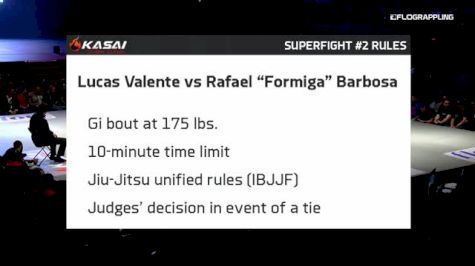
Lucas Valente vs Rafael Barbosa Kasai Super Series 1
Camron Couch vs Marcus Antelante Kasai Super Series 1
Dulces Flores Jr. vs Bobby Alexander Kasai Super Series 1