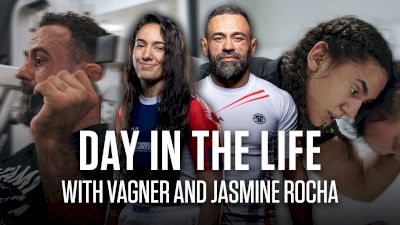
Vagner Rocha returns at WNO 29 when he takes on Kit Dale in the main event of our first card in Miami, FL. Vagner is one of modern jiu-jitsu's most remarkable athletes for his ability to compete very effectively even when giving up 15+ years in age to his world class opposition. How does someone who is genuinely old enough to be the father of ADCC medalists still able to make the finals himself? Let's take a look at some of the techniques and strategies that have made this possible.
- The WNO 29: Rocha vs Dale Betting Lines - Who's The Favorite This Friday?
- With Owen Jones Out, Gianni Grippo To Face Max Hanson At WNO 29
- Five Reasons To Watch The WNO 29 Undercard
First off, let's point out two overarching principles that we'll keep coming back to in this article. The first is that Vagner's style is a great example of the idea that the best jiu-jitsu (especially when you are older and need to be smarter) is done when you can make your opponent work harder than you to no benefit. The more positions and exchanges where you are forcing them to expend energy will bring down the speed, bring down the power, and make everything much more manageable.
The second thing is that is an overaching, guiding principle for Vagner's game is that he is very brutally physical. There's no invisible rules with Vagner, no gentleman's agreement to stay away from rude or 'mean' techniques. At the professional level, these concepts just don't exist and no one has taken it more to heart than Vagner.
There's a reason he's the only guy to medal in his weight class at each of the last 4 ADCC World Championships. We found eight things that students of the game (especially older students) can take from Vagner's game and potentially add to their own, or at least keep an eye out next time he takes the mats. This isn't an exhaustive list and it's just what I noticed while watching the matches he has archive on FloGrappling. Let's take a look!
1. The Simple-But-Effective Mercy Grip System
From the feet, instead of getting into long, drawn-out hand fights that could expend a lot of energy, Vagner is looking to get to one simple gripping position. If you don't look closely, you'd think he's just grabbing two mercy grips and walking around but there's a lot more to it.
A 'mercy grip' is when you interlace fingers with your opponent so you both have the same locked hands grip on each other. It's a very limiting grip where there's not much offense going on to that side. Vagner will get this grip constantly with his right hand and then use his left hand to get a dominant grip on his opponent's hand, holding it over the top so he can neutralize that side. Grabbing like this ensures you are keeping your opponent to basically nothing they can launch back. Very safe.
From this mercy grip/hand grip position, Vagner will drag the arm, club the head with collar ties to wear down their neck, or even launch a wrist lock. The most infamous example has to be from 2018, when he hit this insane wrist lock on Marcin Held.
I'm not recommending you start gripping onto your training partner's fingers and bending them around but this mercy grip system is a really solid way to stay safe on the feet while you set up your own offense.
Something else that's kind of interesting is the way Vagner approaches pulling on the head. Rather than taking short burst snap downs, he will get one or even both hands on the back of the neck and do a long, isometric pull where he's hanging as much of his weight as possible. He's not pulling - therefore he's not under tension and not exerting energy. Instead, he's just weighing them down.
That makes for a really tough carry for the opponent, and it's got a great enervative effect where people's energy drains over time like there's a leak in a boat. Different way to approach the collar tie pressure but it works great for Vagner.
2. The Lowest Risk Way Of Shooting For Takedowns - And Finishing
So while that mercy grip system is really helpful for staying safe and limiting their options, eventually you have to get to your own takedowns - and Vagner has a really solid, simple system for this too. When he does eventually tie up with someone he is pushing and pulling and wearing them down from his mercy grips. In that in between time, though, before he ties up he is constantly doing small jab steps and level changes that keep people guessing. Is he about to shoot in? Crash in and tie up? Rush you off the mat? It's hard to tell.
When he does eventually decide to shoot, it's never with a deeply committed leg attack like a freestyle wrestler. Instead, he shoots very high with his center mass in the chest and begins running. If he catches the timing right, he can tackle people down. If not, he steps around to try to finish with a trip of some kind (often a kosoto variation). If neither of those play out, he just takes the solid upper body position and begins to work from an underhook or working out to an over tie. No rush, no risk, highly effective.
This is probably the most common way for Vagner to score takedowns. Even when he's giving up over a decade in age, he uses this to navigate the most athletic position with the most athletic guys in the game. Pretty cool!
Now let's move to how Vagner passes. It's not the flashiest, most dynamic movements. Instead he's able to build and camp within the guard as he builds pressure and then smashes his way to side control. Simple, old school, effective, and done with an attention to the details and a patience that lets it really shine at the elite levels.
There's two stages here; forcing the half guard and how he passes the half guard. It's important to keep in mind that once you get chest to chest in the half guard, past any knee shields and other frames, the top player is now in a massively advantageous position. The opponent has next to no offense, there's many submission opportunities, and the bottom player has to carry the weight and pressure of the top. Getting there is the equivalent of a boxer putting an opponent in a corner where they can start to really build up their attacks.
Once Vagner is on top he is high stepping out of leg entanglements and wrestling his way into a knee cut/split squat position where it's time to build up the pressure. He puts his head low (on or near their top shoulder), thumb posts the top armpit to kill underhooks, and sprawls weight into the frames of opponents who cannot move. Like water building up, eventually something has to give and Vagner can move into that chest to chest position - often against someone who's more tired for having fought that sequence.
Once he is in the half guard, he uses a classic - the reverse underhook. In the half guard instead of grabbing the head, Vagner crosses that arm all the way across and wedges it under the opponent's far armpit (where you'd usually slide in an underhook, if you wanted a traditional head/arm grip). It's a crazy heavy anchor that gives you a better base to settle into as you clear your foot from the guard. This is also sometimes called twister side control under the 10P system.
After he passes, Vagner will also settle position with different grips on the legs which I think is technically interesting. These grips like the navy ride and far scoop grip are really helpful in pinning the hips and stabilizing the pass and they are something way more people could be using.
4. Just Get Up - But With A Kick-Start
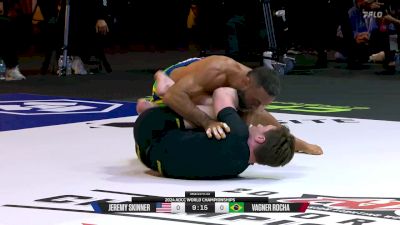
At the professional levels of no-gi grappling, if you aren't a great submission artist from your guard then it's likely you are better off getting up. If you are 43 and spending a long time carrying people's weight is going to be a killer for you as a tournament rolls on, then you have to find out the best way to get up fast. Vagner, I believe, has done that.
Sometimes what works best is a really beautiful, technical sequence where you can tell the person has drilled it and worked it for many hours. Then there's strategies like Vagner's, which is 'kicking' a guy in the chest and getting the heck up immediately. Is the Spartan kick (as it is sometimes affectionately called) mean or illegal? Mean is in the eye of the beholder, but it works great and it is certainly not illegal under the right circumstances.
To make sure you aren't literally kicking the top person away, I would recommend the following rule of thumb: if your foot makes contact and then you begin pushing, it's probably fine (like a leg press). If your foot makes contact in the same motion you are pushing, it's probably a kick (which is also more likely to injury or even slip off the center mass and just not work).
For people in BJJ, getting up is often the last thing on their mind but it can often be the best decision. If you need to get up - fast - then the Spartan kick is a great tool and Vagner (and his kids) use it really well.
5. The Value Of A Good Throat Post
As I was writing this article, I mentioned it to a few jiu-jitsu fans I know and they all asked me the same exact thing - 'Are you going to talk about him grabbing throats?'. Short answer, yes I am. Long answer, he's not really grabbing the throat and it's actually a really helpful post to use in the right situations. Let's talk in defense of the throat post.
A throat post is a hand (often in a c-grip) against the neck/throat that can be useful for a few things. It's not trying to grip and crush the windpipe. For as tough as competition black belts are, they'd be protesting that to the referees. What it can do, though, is keep people from advancing. Want to invert? Throat post means you are inverting into a choke. Want to scoop and slide into the legs? Not if moving forward means forcing your windpipe into their hand. In many ways it is the opposite tool to the collar tie; rather than grabbing one end of the skull to pulling force, you are framing the other end of the skull to add a pushing force.
You can also be using the throat post from bottom, to create a frame against pressure. It's important to remember, if you don't want to be "that guy" in the gym, don't start grabbing windpipes like you're in Mortal Kombat. It's a measured, careful frame at the neck where you aren't pushing in - but if they push themselves in, that's their problem and your advantage.
6, Don't Be A Leg Locker - Be Counter Leg Locker
There is an unavoidable truth in leg locking - every time you lock up a leg entanglement, you are either exposing your own leg right back or your opponent is just a few moves from putting you in danger. Because of this, most people work their entanglements very, very carefully and spend years learning how to best get into leg locking positions without getting in trouble themselves.
Not Vagner. Instead, he's found a hack in the system - he finds moments to counter leg lock rather than ever bothering to be the one to initiate lower body exchanges. The best example has got to be the ADCC 2022 medal match with Eoghan O'Flanaghan where he threaded in a 'bolt cutter' style foot lock (which comes on like an Estima or other folding submission) but he's got plenty on his record.
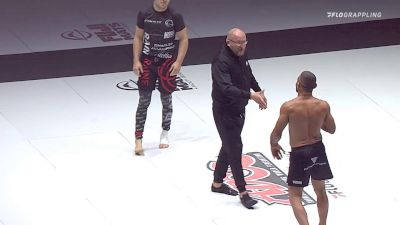
The strategy is simple; stay safe, keep your legs free, and make it hard for your opponent to climb into an entanglement. When they finally do, explode into your own lock and force the tap they just worked so hard to get into. Even if these don't work, they can really put some doubt into the guard player and give more advantage back to the top player.
This isn't me saying you should explode into leg locking your gym partners, of course. These are elite professionals that sign up for a certain level of brutality. But if you are an older guy who wants to leg lock - try countering.
7. The Trick To Vagner's Rear Body Lock (Kinda Genius)
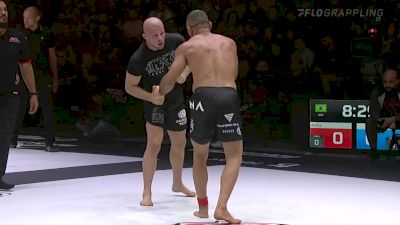
I think Vagner's rear body lock strategy is one of the most interesting things he does on the mats, precisely because it LOOKS very athletic but ultimately I don't think it is - just effective. It all draws back to that same question; how can we make them work harder than I am? Let's break it down.
However it happens, once Vagner gets behind the person with a body lock around their waist, he is jumping to the back and wedging his knees around the hip joints in a way that anchors him in. Now, with the forward pressure he can create just by leaning, the opponent is wearing his 170-190lbs like he's a backpack. That is a draining experience and eventually they bail out, and in that escape they will open up at the hips and Vagner sinks in the hooks to take the back. Once he's there, watch the rear triangles and armbars if he can't get to a simple RNC early.
This is something everyone can be doing. If you have enough athleticism to get up to the back - which is not far - then you can hang, hold, and wait. From there, you can make even much faster, younger opposition give up the back.
8. Someone Always 'Wins' The Reset - Be That Person
Every time two athletes go out of bounds in a jiu-jitsu match in any kind of position, the referee will either reset them in that position or totally restart things neutral. If there is a reset, I contend that it is basically impossible to perfectly restart a position - even with two cooperative athletes. Someone will always get the better of that restart - and Vagner is always that guy.
It's like a negotiation, whatever the referee can get both guys to agree to is ultimately where they will start. Vagner negotiates like he's a trade expert on the mats. He's not doing anything illegal or trying to get to positions he didn't 'have' - it's more like he wants the margins to favor him a little. If he has a loose rear body lock, he'll restart as tight as possible. If he goes out of bounds in a front headlock, he wants the person carrying as much of him as possible when they restart.
Little moments like this add up and those exchanges can quickly compound into takedowns and dominant control. All of this is perfectly legal and it is a recognition of a competition truth - someone always wins the restart, and when Vagner is on the mat you can bet he's going to be that guy.
WNO 29 Tickets Available Now
For those in the Miami area, tickets for WNO 29 are available now.
How to Live Stream WNO 29 Press Conference
- STREAMING: Watch the WNO 29 Press Conference on FloGrappling. SIGN UP HERE.
- On Your TV: Now Available on Roku, Fire TV, Chromecast & Apple TV.
- Cast: Cast to your smart TV including Vizio, Samsung and LG TVs.
- On The Go: Download the FloSports app on iOS or Android.
FloGrappling Archived Footage
Video footage from the event will be archived and stored in a video library for FloGrappling subscribers to watch for the duration of their subscription.
Watch BJJ On FloGrappling
FloGrappling is the streaming home to the best Brazilian Jiu-Jitsu events and news coverage. FloGrappling is the streaming home of:
Join The BJJ Conversation By Following FloGrappling On Social
- Follow us on Twitter @flograppling
- Follow us on Instagram @flograppling
- Watch us on YouTube
- Like us on Facebook